
Choice of injection molding or blister molding for robot shell
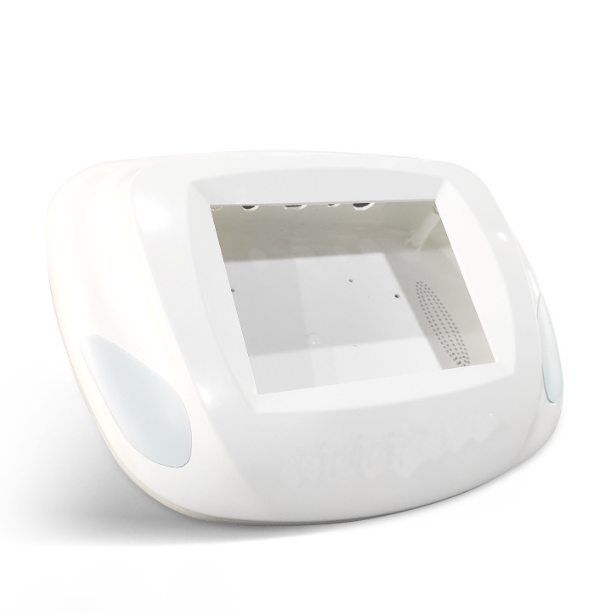
The choice of manufacturing process (injection molding or vacuum forming) for a robot housing depends primarily on factors such as the housing's structural complexity, dimensions, precision requirements, production batch size, and cost budget. In today's rapidly evolving robotics industry, housings serve as both the first impression and a protective barrier for the device. The choice of manufacturing process directly impacts product quality and market competitiveness. As a company with extensive experience in plastic molding, CS MFG SOLUTION, drawing on our experience with over a thousand custom robot housings, explains the applicable scenarios and selection logic for injection molding and vacuum forming. The following detailed analysis focuses on the characteristics, applicable scenarios, and comparative perspectives of the two processes:
一、Injection Molding
1. Process Principle: Molten plastic material is injected into the mold cavity under high pressure using an injection molding machine. After cooling and solidification, the product conforms to the mold shape.
2. Application Scenarios:
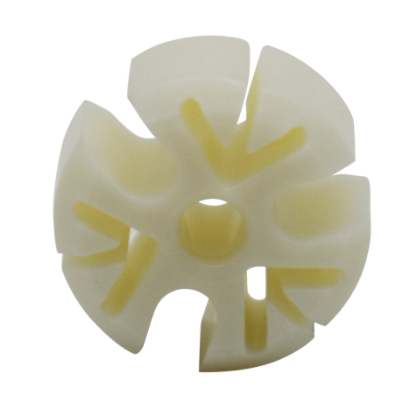
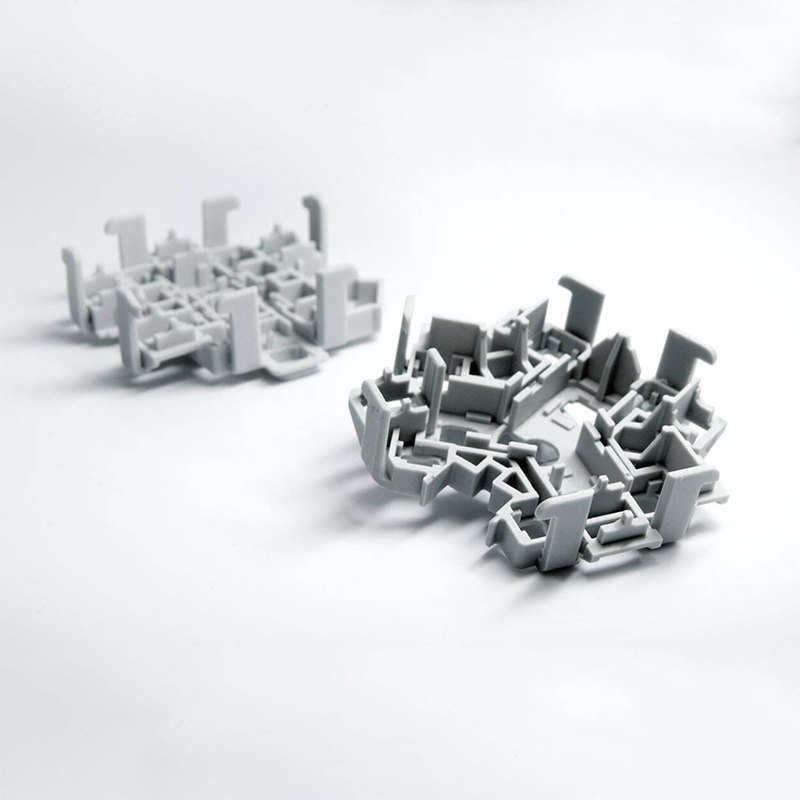
① Complex Housings: For robot housings with intricate features such as snaps, grooves, threads, and ribs (e.g., small service robots or industrial robotic arm housings), injection molding can precisely replicate mold details.
② High-precision requirements: Injection molding offers superior molding stability when dimensional tolerances must be controlled within ±0.1mm (e.g., when the housing needs to fit seamlessly with internal components).
③ High-volume production: Mold costs are relatively high (typically tens to hundreds of thousands of yuan), but the cost per unit is low during mass production, making it suitable for annual production volumes exceeding 10,000 units.
④ Material diversity: A variety of engineering plastics, such as ABS, PC, PA (nylon), and POM, can be used to meet specific performance requirements such as impact resistance, high-temperature resistance, and flame retardancy.
3. Advantages:
① High molding precision and excellent surface finish, achieving high-quality appearance without the need for secondary processing.
② Suitable for integrated molding of complex structures, reducing assembly steps.
③ Stable material mechanical properties, with good strength and toughness.
4. Limitations:
① Long mold development cycle (weeks or even months), resulting in high initial investment.
② Not suitable for very large housings (due to limitations in the tonnage of the injection molding machine).
二、. Blister Forming Process
1. Process Principle: A heated, softened plastic sheet is placed over the mold surface, vacuumed to conform to the mold shape, and then cooled to form.
2. Application Scenarios:
① Simple, large housings: Such as the top cover of a sweeping robot or the outer cover of a large service robot (large surface area, flat structure, or simple curvature). Blister forming facilitates large-scale molding.
② Small-batch or customized production: Low mold costs (usually several thousand to several tens of thousands of yuan, mostly made of plaster or aluminum) are suitable for prototype production or annual production of fewer than a few thousand pieces.
③ Lightweighting: Blister-formed products feature thin-walled structures (typically 0.5-3mm thick) and are lighter than injection molded parts.
3. Advantages:
① Low mold costs and short development cycles (days to weeks), making them suitable for rapid iterations or small-batch production.
② Suitable for large, simple structures with shallow drawdowns, with high molding efficiency.
4. Limitations:
① Low precision (dimensional tolerance ±1-3mm), prone to shrinkage marks on the surface, and poor detail (unable to mold complex clips, threads, etc.).
② Poor material thickness uniformity and low mechanical strength (weaker impact resistance than injection molded parts).
③ Only unidirectional stretching is possible, making it impossible to mold deep cavities or complex three-dimensional structures.
三、 Summary: How to Choose?
To choose the most suitable manufacturing process for your robot parts, consider various factors, including the degree of assembly, precision requirements, and quantity requirements. If the robot housing has a complex structure, requires high-precision assembly, and requires large production runs (such as small consumer robots), injection molding is preferred.
Comparison Dimensions | Injection Molding Process | Thermoforming Process |
Structural complexity | Suitable for complex structures (snap-fits, grooves, etc.) | Suitable for simple, flat or shallow curved structures. |
Size | Mainly small and medium-sized, constrained by equipment limitations. | Can be made in large sizes, more flexible. |
production volume | Large volume (cost advantage is obvious) | Small batch or customization (lower cost) |
precision and strength | High precision, high strength | Low precision and weaker intensity |
initial investment | High (expensive mold) | Low (cheap mold) |
development cycle | Long | Short |
If the housing is large and simple, with small production runs or requires rapid trial production (such as customized service robot covers), blister molding is preferred.
四、 Choosing a Professional Manufacturing Partner
Still unsure about the optimal manufacturing process? Then you can choose to work with us. Whether pursuing millimeter-level precision injection molding or requiring rapid implementation of blister packaging solutions, CS MFG SOLUTION provides customers with the optimal process combination through 3D scanning, reverse modeling, and design-for-manufacturing (DFM) manufacturability analysis. Leveraging our mold design expertise and flexible production systems, CS MFG SOLUTION offers robotics companies full-cycle housing solutions, from prototyping to mass production.
If you would like to discuss a customized process solution with a professional manufacturing facility, please contact our technical team for a one-on-one evaluation.
The five key elements of injection molding are core parameters that affect product quality and process stability, specifically including:
1. Temperature
-- This includes melting temperature, mold temperature, hydraulic oil temperature, etc., which directly affect the flowability of the plastic and the cooling and solidification effects.
-- Excessively high temperatures may lead to material decomposition, while excessively low temperatures affect filling.
2. Pressure
-- This is divided into injection pressure and holding pressure, ensuring that the melt adequately fills the mold and reduces shrinkage deformation.
-- Holding pressure is particularly crucial for product dimensional accuracy.
3. Time
-- This encompasses holding time, cooling time, drying time, etc., and must be adjusted according to material characteristics to optimize the molding cycle.
-- The cycle time should be minimized while ensuring quality.
4. Speed
-- This includes injection speed, glue melting speed, etc., which affect the filling appearance and the distribution of internal stresses. -- Typically, segmented control (such as slow-fast-slow) is used to avoid defects.
5. Position
-- This relates to measurement position, ejection position, etc., and is associated with the precision of mold opening and closing and the actions during the injection molding phase.