
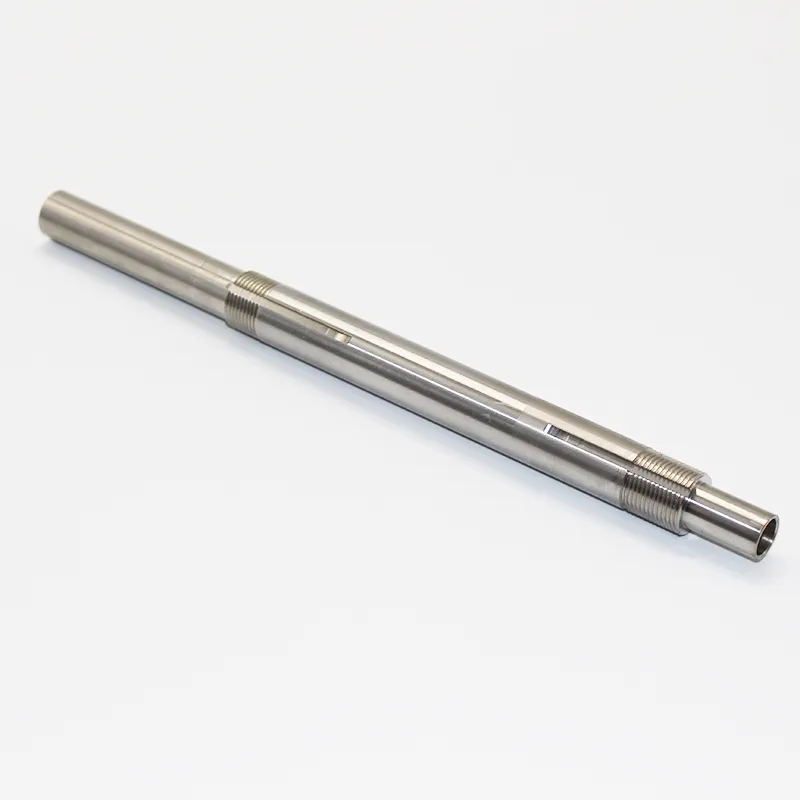
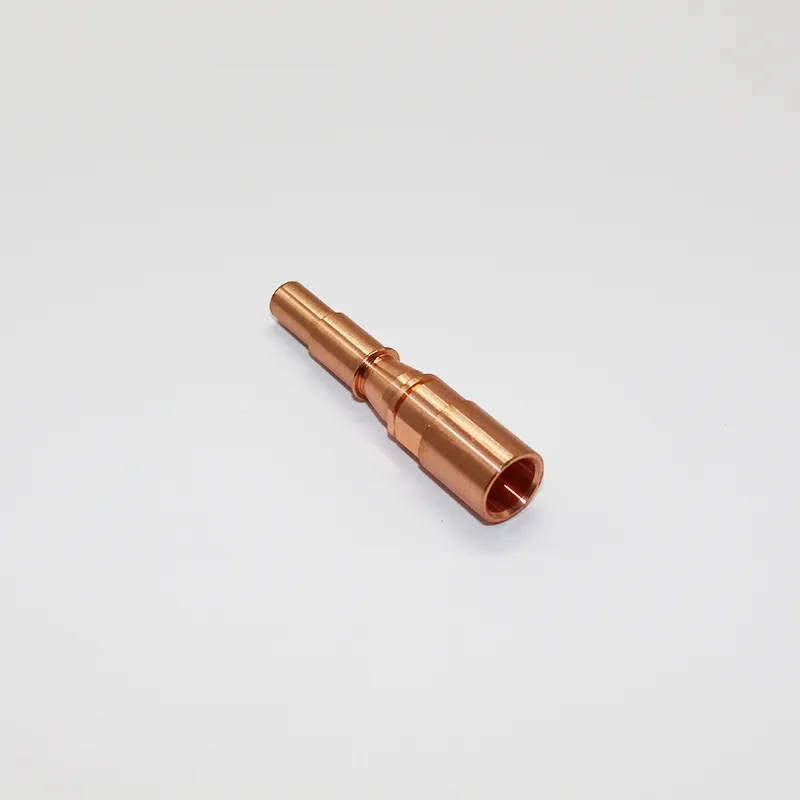
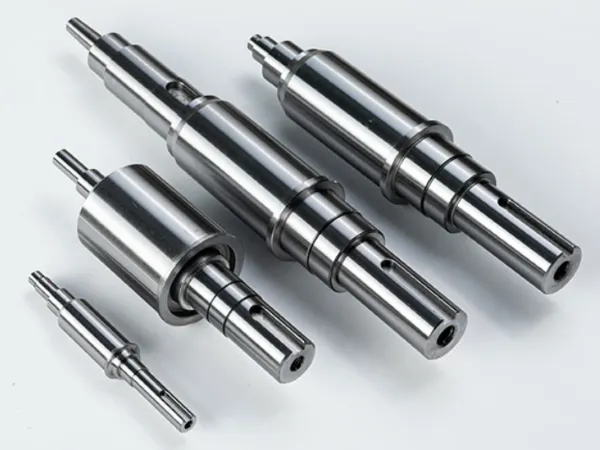

Common problems and solutions for screw processing
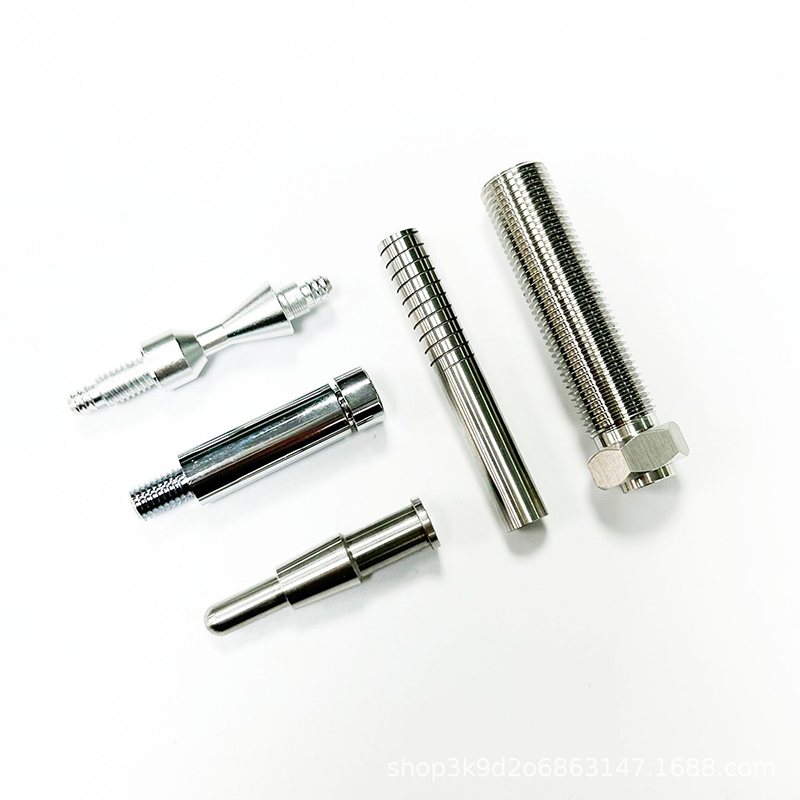
In the field of non-standard customized parts processing, screws are the basic but key connecting components, and their processing quality directly affects the overall performance of the product. With years of industry experience, CS MFG SOLUTION has summarized the following common problems and targeted solutions to help customers break through production bottlenecks.
1. Insufficient thread precision: The three-level control system builds a solid quality defense line
Poor thread fit often leads to assembly failure. CS MFG SOLUTION has achieved a breakthrough through three-level precision control:
Bottom hole pre-control: High-precision CNC equipment ensures the bottom hole tolerance of ±0.03mm, and ST plug gauge full inspection ensures basic accuracy.
Dynamic thread rolling: The torque monitoring system is introduced to adjust the pressure in real time. The titanium alloy thread adopts three-stage rolling, and the pitch deviation is controlled within 0.01mm.
Gap compensation: The glue filling method is used for reverse correction in precision scenes. A medical manufacturer has increased the pass rate of cochlear implant threads to 99%.
II. Material deformation and cracking: Process collaboration solves the strength problem
High-strength material processing is prone to cracks, and CS MFG SOLUTION solves this problem through process combination:
Precise heat treatment: High-frequency quenching equipment controls the temperature by ±3℃, and the quenching layer depth accuracy of titanium alloy screws reaches ±0.05mm.
Compound cooling: -20℃ oil mist combined with spindle water cooling, the titanium alloy processing deformation is reduced from 0.15mm to 0.04mm.
Pretreatment optimization: Carbon fiber materials are activated by plasma, and the processing delamination defects are reduced by 60%, and the qualified rate of new energy brackets reaches 97%.
III. III. Too fast tool wear: Double upgrade of materials and coating technology
In project production, are you always troubled by the high tool cost and the inability to reduce it? CS MFG SOLUTION's solution directly hits the pain point:
First, special tools. When processing high-silicon aluminum alloy, PCD tools are used to extend the life by 8 times and reduce the unit cost by 40%.
The second is nano coating. AlTiN coating reduces the friction coefficient to 0.12 and reduces the frequency of tool replacement for stainless steel processing by 70%.
At the same time, we introduced an intelligent parameter system. The AI algorithm optimizes cutting parameters in real time, and a certain automotive parts manufacturer has reduced tool loss by 30%.
IV. Poor batch consistency: Digital system achieves precise control
The problem of dimensional fluctuation in batch production is completely solved by intelligent system:
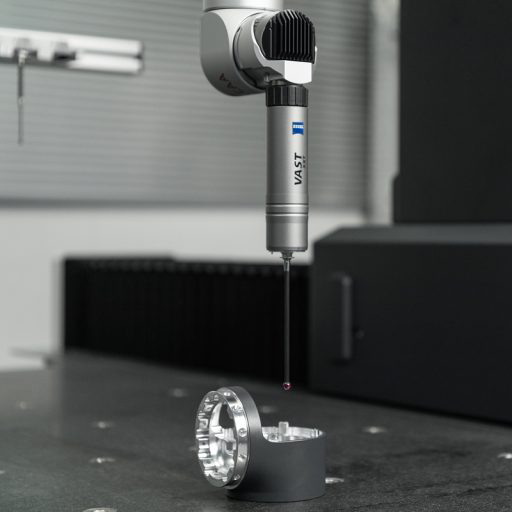
Full inspection technology: Optoflash system completes 360° scanning in 10 seconds, with detection accuracy of ±0.001mm and CPK value increased to 1.67.
Equipment interconnection: IoT system realizes multi-machine collaboration, automatically schedules production when tool abnormalities occur, and reduces downtime by 20%.
Process fine-tuning: Dynamic SPC system corrects parameters in real time, and batch dimensional fluctuation is controlled within ±0.015mm.
V. Complex structure processing: Composite process breaks through manufacturing boundaries
Special-shaped screw processing is no longer limited, and CS MFG SOLUTION's innovative technology opens up new possibilities:
Five-axis linkage: One clamping completes multi-faceted processing of aviation screws, with efficiency increased by 60% and shape and position tolerance of ±0.01mm.
Integration of additive and subtractive materials: 3D printing blanks + CNC milling, the flow channel accuracy of medical implant screws reaches ±0.02mm.
Micro-nano processing: laser etching nano grooves, the anti-loosening performance of mobile phone M1.2 screws is improved by 2 times, and the failure rate is reduced by 87%.
VII. Choose the right manufacturing partner
The processing upgrade of precision screws is the synergistic result of process details and intelligent technology. CS MFG SOLUTION pursues 0.01mm-level precision and provides customized solutions for medical, aviation, new energy and other fields. Whether it is mass production or complex parts processing, we always promise 99.9% yield rate and become your reliable manufacturing partner.
Contact us now and let CS MFG SOLUTION become your reliable partner for precision manufacturing.
What are the CNC machining processes?
1. Principles of Processing FlowRough and finishing sequence: First, perform rough machining to remove excess material, then carry out finishing to ensure precision, which can effectively improve efficiency and prevent deformation of parts.Tolerance priority: Prioritize machining the areas with larger tolerances, followed by those with smaller tolerances to avoid scratches on surfaces with small tolerances.Reference surface priority: The precision reference surfaces should be machined first to reduce errors in subsequent clamping.
2. Key Technical FeaturesEquipment and programming: G-code programming is used to control machine movement, combined with CAM software to generate programs, supporting multi-axis linkage (such as five-axis machining centers) and complex surface machining.Precision and efficiency: Modern CNC systems (such as Huazhong Type 10) are embedded with AI chips, increasing processing efficiency by more than 10%, and positioning accuracy can reach ±0.002mm.Material adaptability: Can process metals (aluminum, steel, stainless steel, etc.) and plastics (ABS, POM, etc.), requiring tool selection based on material.
3. Typical Operation StepsClamping and positioning: After cleaning the workpiece surface, use equal height steel to fix it, and determine the machining zero point with a probing head.Tools and parameters: Select tools based on process requirements (e.g., carbide end mills), set cutting speed (120-300m/min) and feed rate (0.05-0.2mm/tooth).Program verification: Simulate the tool path using CAM software, generate NC code, and then process it on the machine.
4. Application FieldsWidely used in mechanical manufacturing, aerospace, medical devices, etc., especially suitable for batch production of high-precision complex parts.
Screw Machining Technology
1. Cold Heading ProcessCharacteristics: Molding metal wires at room temperature through molds, with a material utilization rate of 80-90%, and high production efficiency (more than 300 pieces per minute).Application scenarios: Suitable for small diameter bolts, nuts, rivets, etc., with materials including carbon steel, stainless steel, etc.Process: Coil wire → Annealing → Pickling → Wire drawing → Heading → Thread rolling → Heat treatment → Electroplating
2. Hot Heading ProcessCharacteristics: High-temperature processing reduces material hardness, suitable for large diameter or complex shaped screws, but requires additional treatment for oxidation and decarbonization issues.Comparison with cold heading: Cold heading has better surface quality, while hot heading is suitable for large-sized products.
3. Turning ProcessCharacteristics: High precision, no mold limitations, suitable for small batches or special screws, but higher costs and slower speed.Tools: Forming lathe tools, threading comb tools, etc.
4. Forging ProcessCharacteristics: Forming by impact force or pressure, enhancing product strength, suitable for mass production, but with high equipment requirements.5. Thread Processing TechnologyMethods: Including turning, milling, tapping, rolling, etc.; transmission threads need to be combined with grinding or whirling milling.Common issues: Tool jamming, thread misalignment, etc., requiring adjustments in tool installation or the use of flexible tool holders to resolve.